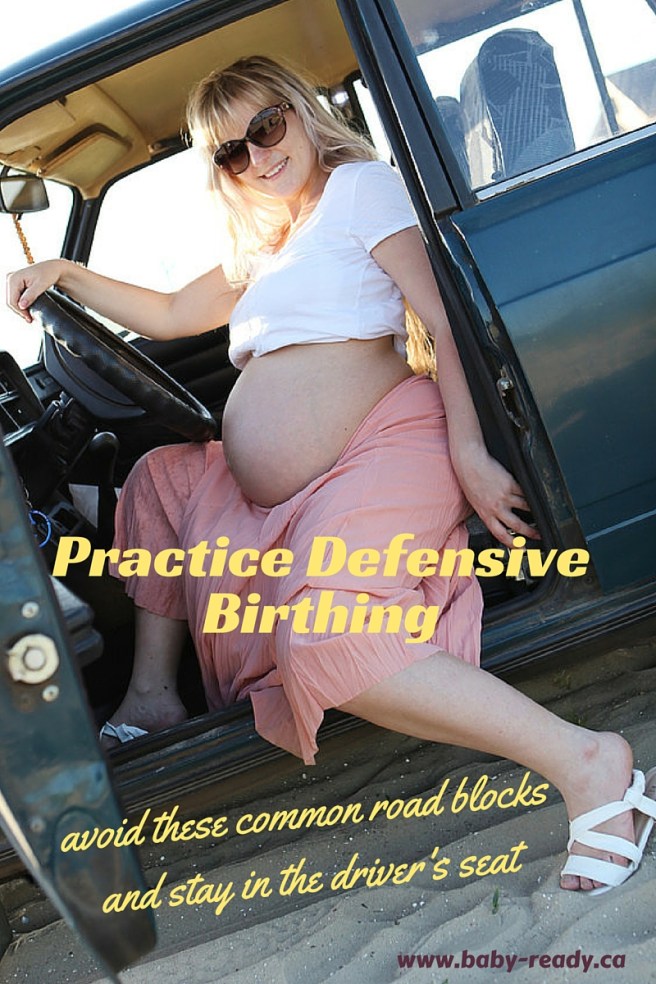
Practice Defensive Birthing

Defensive birthing

Nowadays hospitals are practicing defensive medicine – which basically means they feel they have to use all their tools and interventions to prove that they’ve done everything they can to produce the best outcome.  But their idea of the best outcome starts and ends with a healthy baby. Sometimes the Mother gets lost along the way.  Mother friendly hospitals acknowledge that the mother’s experience is also important –a traumatic birth experience can result in poor bonding between Mother and Baby which can effect breast feeding success and cause postpartum depression. There are ways to optimize your birth experience even in the most intervention – happy hospitals.

Here are a few tips to help you negotiate these common road blocks on the way to your best birth:


speed bump

Childbirth is not an area where ignorance is bliss. You wouldn’t leave on a road trip without checking a map, don’t go blindly into labour. Go to prenatal classes, read books, decide what kind of birth you want and write a birth plan. For tips on how to do that, check here.



slow


Transfer to hospital can slow down or even stop your labour. If you show up too early the hospital may feel the need to ‘do something’ to speed you up. Stay at home as long as possible.


do not

Well meaning nurses undermine your determination to have a natural birth by offering drugs every 2 seconds. Get the nurses on your side. Hit the drive through on the way to the hospital and pick up a dozen donuts. Print out a sign that says “We are trying  to have a natural birth! Please don’t talk about epidurals! I’ll ask for one if I want one.” Stick it on the donut box. Print another and stick it to the door.

traffic lightsUnfamiliar places make relaxing into labour difficult. Treat the hospital room like a hotel room. Don’t be afraid to open all the cupboards and check the place out. Use all the blankets and pillows, don’t be shy. You are paying for this room, make it yours. Find the light switches and turn them off!  Bring your bedside lamp from home or some battery powered candles and dim the lights.

 

picnic-areaYou need to eat and drink to keep your strength up – but do not expect the hospital to provide you with decent food. Bring a picnic and choose your snacks wisely. Nothing too smelly! Some old school nurses still believe you should restrict food and drink in labour, even though the research doesn’t support this and even the American Society of Anesthesiologists has stated that it’s okay.


pedestrian_crossing_vector_sign_9603The bed looks really inviting  but it’s best to stay upright as much as possible. If you must be monitored insist on sitting upright preferably on a birthing ball to keep your hips open and flexible.  Play music to calm and soothe you, or get you up and dancing. Moving your hips is a great way to get baby to move down and out. Dance and sway and walk around the floor.


car-wash-When you are beginning to think you can’t do this anymore -use the facilities! Seriously, if there’s a tub you want to get in it. And here’s a little secret – those pillows can totally go in the water. They’re designed to clean up after all kinds of bodily fluids, so if you need a bath pillow just grab one off the bed and use it. Hydro therapy can be very effective and if you are feeling like you might want an epidural, try the shower first.

 Bring a supportive pit crew. Your partner, a doula, a RMT, pit crewyour best friend. The more support the better.  How nice it can be when one person is rubbing your feet and another your back while a third is bringing you a drink of ice cold water. Your birthing suite should be like a 5 star resort with a spa, and you should be treated accordingly.  Unfortunately this isn’t usually the case, so you must bring your servants with you. If you find you prefer solitude when labouring, park your people at the door to keep it closed.

stop sign

Don’t let anyone tell you what to do. I’m not saying ignore doctor’s advice, but if you feel like you’re being bullied, you are. You can tell your doctor to change his attitude or get out. You can tell your nurse to shut the f up. You are in labour, dammit, and you can get away with anything! And have your pit crew back you up. A chorus of “she said no” is helpful to remind the staff that consent is actually required before they do anything.


wiggle road sign


Try to enjoy the journey. Your labour may seem endless while you are in it but soon it will be over and your baby will be in your arms. And then the real trip begins!


Do you like this article? Please subscribe!

A brief history of childbirth

It’s World Doula Week! Who knew? I didn’t and I am a practicing doula and have been for nearly 14 years.  The idea of hiring a trained birth attendant may seem like some strange new hipster idea, but actually women have had doulas present at their births for generations. A lot of people are confused about the role of a doula and so to help with that confusion let me present:

BABY READY’s a brief history of childbirth featuring the doula!

childbirth

ANCIENT GREECE – the word doula comes from the Greek work for female slave. But even slaves had a hierarchy and could advance to positions of power and influence.   The slave who rose to be the chief lady in waiting to the woman of the house had the privilege of attending her during childbirth. This stone relief from Isola Dell’ Sacra, Ostia, 1st century CE shows a woman labouring with a midwife at her feet and an attendant (a doula?) supporting her from behind.

MEDIEVAL – in medieval times fertility was greatly prized and women were encouraged to have as many babies as possible. The upper class were marrying off their girls as young as 12 as long as they had started puberty. Noble women used wet nurses rather than breast feeding their own offspring so that they could regain their fertility sooner and churn out a few more sons for the crown. Women would be attended in labour by their household staff if they had them and by their friends and neighbours.medieval

This medieval woodcut is called Der Swangern Frawen und hebammen roszgarten, by Eucharius Rösslin, 1513. It shows a remarkably similar scene to the one above. A midwife at a labouring woman’s feet, an attendant (a doula?) supporting her from behind.  My German is non-existent, but google helpfully tells me that this translates to The Swangern Frawen and Midwife Rosengarten. Maybe another day I will try and find out a bit more about her!


REGENCY/EARLY VICTORIAN.  This lucky woman seems to have her husband supporting her while she gives birth! Even though most of the time childbirth was seen to be a lapbirth.0woman’s only event some men did stay around to support their partners. Here the midwife and birthing mother have the support of two attendants (doulas?) It is also possible that the man pictured is an accoucher – a male midwife or forerunner to the obstetrician. It is during the Victorian era that Doctors (male) started to invade the midwives domain and in the early years they often worked together.


THE RISE OF HOSPITAL BIRTHvictorian hospital

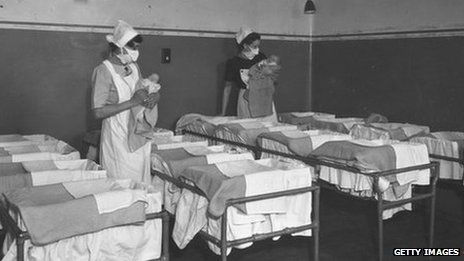
This image from the early half of the 20th century shows nurses with babies in the hospital nursery.  Childbirth in the early 20th century was a nasty experience. Women were shackled to the bed, drugged unconscious, verbally abused and left alone for hours. No wonder there has been a massive kickback. With the rise of feminism in the 60’s and 70’s women began taking back their childbirth rights, and the term ‘doula’ meaning a trained birth attendant was coined at this time. Doulas are hired by pregnant women and their families to support them in having the childbirth experience that they want. In some institutions this set up the doula in an adversarial position with the hospital staff, which is unfortunate as there have been many studies indicating that constant support during labour improves outcomes for both mother and child. Since Nurses are unable to provide that constant support due to cutbacks and overwork, doulas have stepped into the gap.

So there you have it: A very very brief history of doulas! If you are pregnant and live in Toronto, contact me here for more information about how having a doula can help you have the birth you deserve!


5 things to do with a Placenta

Our Design Process(2)


Eat it.Our Design Process(4) (2)

Most mammals eat their placentas. Only humans and marine mammals do not. Those who believe in the benefits of placentophagy say that it wards off postpartum depression and helps balance hormone and iron levels in new moms. However there has not been enough research done to support this theory. The internet abounds with recipes – you can turn your placenta into stew or smoothies but by far the most popular way to prepare it is to dehydrate it and turn it into nice neat easy to consume capsules.

Make a painting with it.Our Design Process(1) (2)

If the thought of displaying a print made out of your own blood doesn’t turn you off, consider making a painting out of your placenta. The beautiful, unique patterns of your baby’s tree of life’ make a one of a kind keepsake.

Extract cord blood from it.Our Design Process(3) (2)

Storing your baby’s cord blood is like having insurance against some potentially fatal diseases. Cord blood banks make their money exploiting parents’ fear, and I’m not too keen on the idea of anyone profiting from someone else’s misery. The idea is that if you store your baby’s cord blood and they one day develop leukemia (for example) you can then use that cord blood to heal them. The truth is that any baby’s cord blood would do, and perhaps national free cord blood banks would be a better choice than private ones, allowing more children to benefit.  The chance that your child will develop a disease that could be treated by cord blood is very small, and the price tag for storage is very high. That being said if you are wealthy enough to not be turned off by the price and unlucky enough to need the blood, then obviously it is worth it. Know that if you choose to bank your baby’s cord blood you are also choosing to clamp the cord early before it stops pulsating, and that blood that goes into the bank is blood that your baby might have had better use for right now. 

Plant it.Our Design Process(2) (2)

Lots of people and cultures have a tradition of planting a tree on top of the placenta.  My son’s placenta was used to fertilize a cherry tree and the people who bought our house are now enjoying its fruit.

Do nothing – for now.Our Design Process(5) (2)

Those who follow the custom of Lotus birth do not cut the cord once the baby has been born; instead it is allowed to fall off by itself.  This requires a bit of a commitment as you have to carry the placenta around in a purpose built bag for a few days or a week. Once it detaches from the baby on its own you can still plant it or paint with it but you can’t eat it or harvest it.


What do you think? Food, art materials, or medical waste?


In defence of the sippy cup.

I breastfed my daughter till she was 2 1/2. I don’t mean to sound smug when I tell people she never had a bottle, it wasn’t because I didn’t offer her one. Madam preferred to go without than use an artificial nipple. At 3 1/2 months she went 6 hours without a feed rather than drink pumped milk in a bottle, milk it took me days of pumping to provide for her, I might add. But eventually she accepted a sippy cup and once she got the upper body strength to lift the thing up, we never looked back. I loved the sippy cup. I could fill it with pumped milk and she would drink it. I could throw it in my bag and it wouldn’t spill all over the place. I lugged around sippy cups full of water and weak juice and milk, both cow and my own, for years. Until one day Madam said “sippy cups are for babies, Mummy” at which point we had a problem.

Playtex, please design a sippy cup for big girls.

Madam still expects me to produce a beverage at any time, no matter where we are. And while she is a big girl, perfectly capable of using a big girl cup at table, apparently she isn’t big enough to not spill her drink all over the inside of her school bag, or my bag, or on the couch, or in her bed. Straw cups work great if you carefully put them down on the table, less so if you put them on the couch or kick them off on to the floor. Flip top cups only keep the liquid in if you remember to close them. I don’t think my kids are particularly careless, they’re just kids. But I’m tired of everything being wet. So I’m going back to the sippy cup, I don’t care how old she is.

Congratulations, you’re pregnant! Now what?

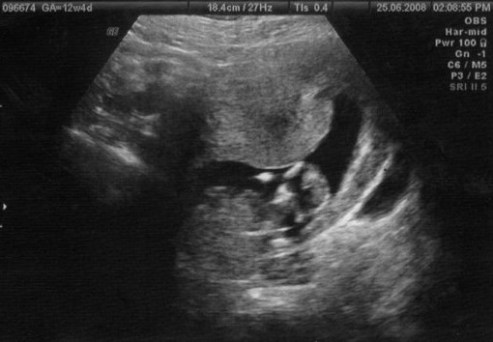
Congratulations! You’re pregnant.  Whether you had been trying for months or this comes as a complete surprise (oops – it happened to me) there are a lot of things to get organized before the baby comes. Here’s 9 things to think about in the next few weeks and months.  10399258_54694385513_2748_n (2)

1) How well do you know your body? If you’ve ever taken the pill you know that pharmaceutical manufacturers expect you to have a 28 day cycle, but that is not true of all women. One of the first things your doctor will ask you when you go to confirm your pregnancy is “When was the first day of your last period?” They will time your pregnancy from that moment, giving you a due date of 40 weeks later. But that assumes you ovulated on day 14. But what if you didn’t? What if you ovulated on day 18, or day 21? What if you have a 32 or 35 day cycle? Those few days don’t matter a lot in the early days, but when you are 40 weeks + 3 days and are feeling pressured to have an induction, knowing that you ovulate late in your cycle may help convince your caregiver to give you a bit more time. A good book to read before you even consider getting pregnant is Taking Charge of Your Fertility by Toni Weschler.

2) Do your research. Figure out what kind of birth experience you want. If all you know about childbirth is taken from TV, you will be surprised to find out that your water will not necessarily break all over your shoes, you will not be struck by agonizing contractions out of the blue, and you will not give birth in 22 minutes, sadly. A good basic book to read is Pregnancy, Childbirth and the Newborn by Penny Simkin. In Canada read The Mother of all Pregnancy books by Ann Douglas. The more informed you are the better. Sign up for a prenatal class and learn as much as you can about what’s going to happen to you over the next few months. You wouldn’t buy a car without doing a ton of research, don’t have a baby without reading a few books about the subject.

3) Pick your caregiver wisely. Ask your friends, ask your neighbours, ask strangers pushing babies in strollers on the street. Ask about the amount of time spent waiting in the doctor’s office versus time discussing your concerns in the examination room. It’s a bit early to hire a doula but you might considering asking their opinions on caregivers as they will have seen all sorts of shit go down in the delivery room. Consider midwifery care over a traditional OB/GYN practice, as midwifes are known to spend more time with their clients and are more likely to actually be present at the birth. If midwifery is not an option in your area find out how your OB practices and ask to meet all the OB’s in the practice so you aren’t meeting them for the first time in the delivery room. Ask about C-section rates – the lower the better, though 15% is average and over 30% would be cause for concern. Ask about their views on administering erythromycin drops to your newborn – the research now shows that this has no benefit and up to date physicians should know this. Trust your instincts. If your physician is rubbing you the wrong way, then go somewhere else. A good book to read is “Expecting Better” by Emily Oster. I also like “Your Best Birth” by Ricky Lake and Abby Epstein. It includes lots of questions you should be asking before you sign on with a particular OB or Midwife.

4) If you intent to go back to work and you live in an urban centre, research childcare centres now. Some of them have wicked waiting lists. I myself called the Childcare Subsidy Office in Toronto to get Baby on the list before I informed my own mother that I was pregnant. You’d be surprised how rich you can be and still qualify for some subsidy money, so sign up as soon as you can. In Canada we are very lucky to have a full year of maternity leave, but that doesn’t mean that there’s a ton of cheap daycare available for one year olds. Daycare can be upwards of $70 a day, so budget accordingly. Which brings me to 5)

5) Get your finances in order. If you are partnered and used to living on two incomes, losing one of them will be a bit of a shock. Start saving now. It’s also a good idea to think about writing or revising your will, and getting a life insurance policy. It’s horrible to think about, but even in 2016 women still die in childbirth. Think about who you want to look after your child if the unthinkable happens and your partner is a basket case. Then try not to think about it ever again, because, hey, it’s 2016, statistically speaking your chances of making it are very, very good.

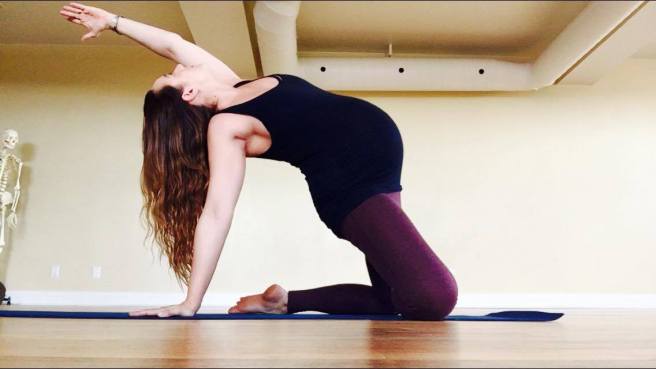
6) Exercise a little bit.

12696470_10156578313195515_252614742_o(1)
Rebecca Nicholson, yoga instructor

If you’re used to going to the gym you can keep going as long as you want to with some modification. If you aren’t much for exercising you might want to consider doing something pregnancy specific not just so you can get in shape for the delivery but also so you can meet other pregnant women. Who knows, you might meet a new best friend. I went to prenatal yoga classes and enjoyed them very much, but there’s all kinds of pregnancy exercise classes out there – dance, aqua fit, swimming. Do something. You’ve heard it said that labour is like running a marathon – don’t go into it without a little bit of training.

7) Eat right. Oh, I know, this is the first time in your life you don’t have to watch your weight, but seriously, now is not the time to throw all caution to the wind, either. Gestational diabetes and preeclampsia can be triggered by obesity but they can also be managed by good nutrition. Eat right now and you may not suffer needlessly later. Add another meal into your routine. Do not make that meal a dozen donuts. Myself, I consumed more breakfast sandwiches in the last few months of my second pregnancy than was probably wise, but I resisted my cravings for Coke and onion rings (most of the time) and only ate poutine once.

8) Get your home Baby Ready! Are you converting an office or a spare room into a nursery? You might want to do it now while you still feel comfortable on a step ladder. Think about where baby is going to sleep – in a crib in their own room, in a bassinet in yours, or do you plan to co-sleep? You might want to put away your breakable tchotchkes now and rethink your glass coffee table and glass fronted media centre. It’s a bit early to worry about baby proofing but anything you do now you don’t have to do later when you’re exhausted from lack of sleep and stressed out over chasing a crawling baby. Attach all bookcases and high chests of drawers to the wall so that they cannot tip over on top of a curious child. Be paranoid now so you can relax later.

9) Research baby gear. There is a ton of stuff on the market and most of it is unnecessary. The only thing you really need before the baby is born is a car seat10398871_160115520513_7574514_n, and that only if you give birth in hospital. Look around your home and think about where you are going to store things. Maybe your tiny condo won’t allow you to own a swing. You can’t use a jolly jumper in an open concept house with no door frames. If you live in a 4th floor walk-up you might need a carrier more than you need a stroller. Or maybe you need to move. Don’t spend a lot of money on gear, everything can be had second hand and it will all be pristine as it’s used for such a short time.

10) Didn’t I say nine things? Oh well get used to it because that 9 month pregnancy they promised you is actually closer to 10. I’m going to take you right back to #1. Get to know your new body. Sleep as much as you can. Naps are really good. Go get massages. Treat yourself like the goddess you are and try to enjoy the journey. Like any trip, if you do your research and know what to expect, you’ll have a much better time.

Enjoy this article? Comment below!


Please don’t hate me.

Please don’t hate me.

734795_10152403936850514_524361315_n


Wherever women with small children gather, be it playgroup or drop in centre or at the park, invariable the conversation will eventually find its way to birth stories. Mothers love to share their birth stories, and often these descend into a horror show contest – I laboured for 42 hours! My 10 lb baby ripped me open! I had an emergency C-section! I gave birth in the car! And invariably some jerk will chime in with “I had a beautiful home water birth. I laboured for only 8 hours, pushed twice, and out he popped! It hardly hurt at all, I could have ridden a bicycle the very next day! Oh, and I had no issues with breastfeeding either.”


I’m sorry. I’m that jerk.

 
When I tell people about my son, I usually jokingly say “I earned him.” He is my second born. He was born just after midnight at home in a rented birth pool. My mother acted as my doula (yes, I’m also that jerk who has that kind of relationship with her mother) my husband got into the pool with me, my daughter slept through most of my labour but woke up when she heard my cries 581243_10151698002730514_476001529_nwhile her brother was crowning and arrived sleepy eyed in the birth room just in time to see him being born. We had a glorious first few hours together and then all went to sleep in the family bed.
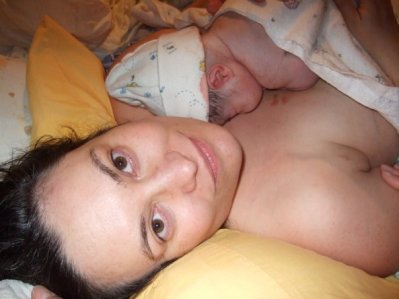
 
My daughter’s birth was not quite as easy, though all in all I don’t have much of a horror story to tell about that one either. It was a much longer labour, 17 hours or so. I pushed for a long time, in a variety of different positions, without much success. While I had planned a water birth for her also she had other ideas and I ended up birthing flat on my back. She was not in a very good position for birthing, facing entirely the wrong way and causing her mother a great deal of back pain. I had a cervical lip that just would not soften and my midwife ended up sticking her arm all the way up inside me and holding it back while I pushed the baby’s head past. This I remember as being far more painful than actually giving birth. Later I learned if that hadn’t worked my midwives had decided that they would have to transfer me to hospital, where I would most likely have ended up under the knife.


I was lucky.


1931240_125665495088_4720_nAs my children grew and I listened to other women’s stories, I realized just how lucky I was. But I realized something else too – luck favours the prepared.  Since I was one of the last of my friends to have children I had benefited from their experiences and knew to seek out midwifery care. I had already done my initial doula training and had attended three births already so I had seen what a hospital birth was like, and I didn’t want that for myself. I had read a million books on the subject of childbirth and was extremely well informed. And most importantly, I believe, I myself was born naturally and breastfed. My mother had told me all my life that childbirth was no big deal, and she also blamed the ‘women’s issues’ she suffered from on ‘those butchers in the hospital’ where my sister was born, who insisted on routine enemas, catheterization and episiotomy and had no idea what to do with this strange Englishwoman with her weird ideas about Lamaze breathing and no drugs. I think her story made me more than a little wary of the hospital way of birth.
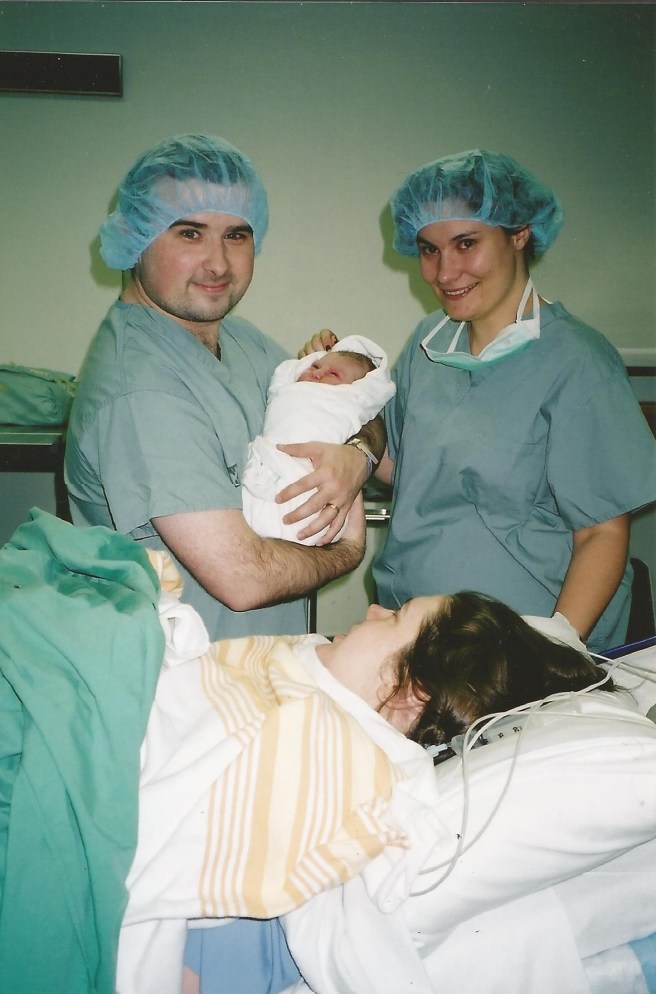
 
People tell me that I am brave to have birthed my children at home, but the truth is I was more afraid of the hospital than the pain of childbirth. And I know for a fact that if I had a doctor instead of a midwife for my first pregnancy I would have had a C-section – no doctor would have done for me what my midwife did. And yet, as a doula I love attending hospital births- it is my goal to make birthing in the hospital as pleasant as possible for my clients. I hope my success stories give them confidence. I don’t believe I am special or different – I think anyone can have the birth they want if they surround themselves with people who believe and trust in the process.


Are you pregnant and in the Toronto area? Contact me here.

My first birth

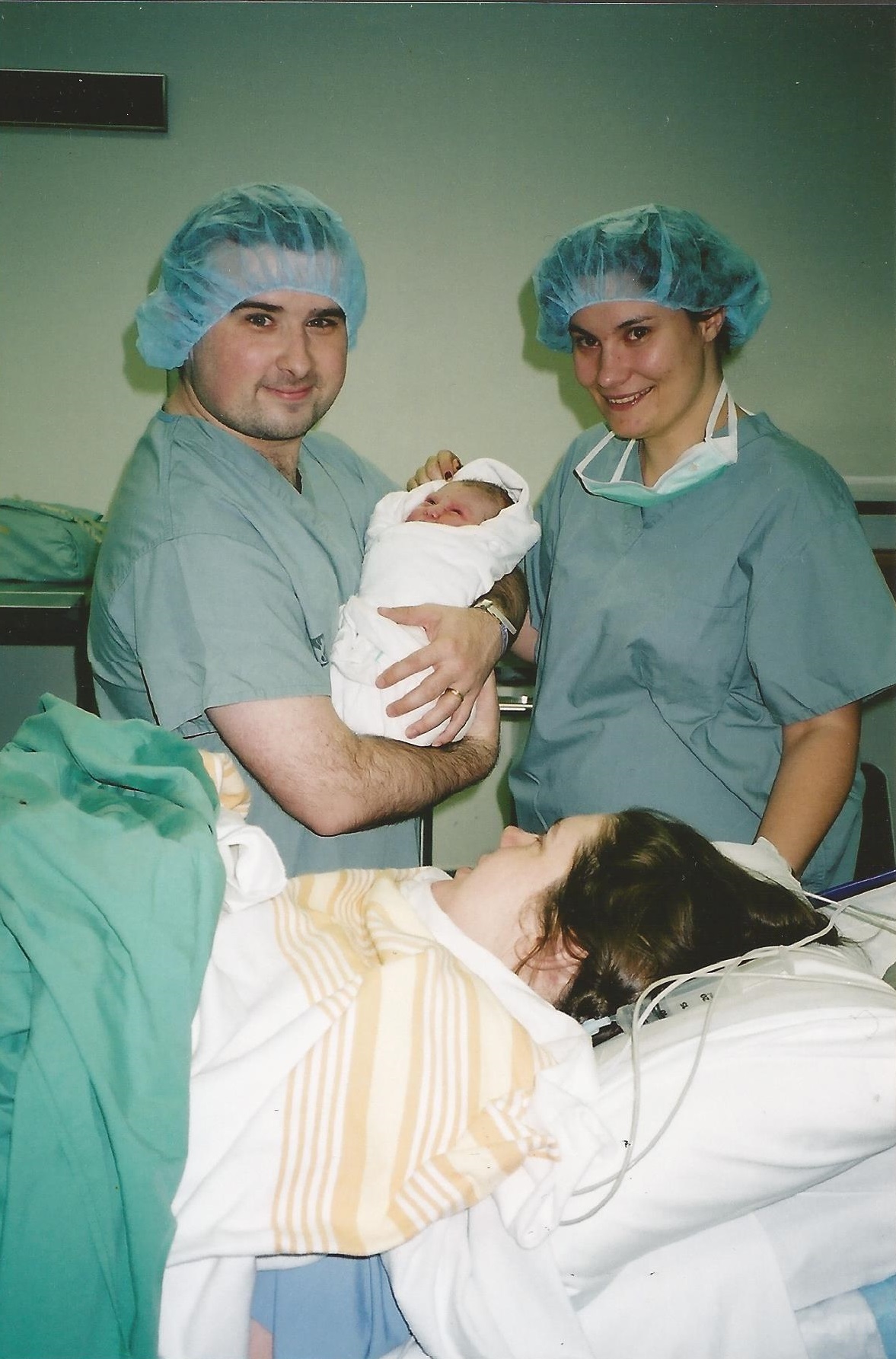
The first birth I attended as a doula was over 13 years ago. Rebecca, my college roommate, my best friend – the first one of us to fall in love, the first one of us to get married, was also the first one of us to get pregnant. I can’t remember whether I’d heard of a doula before that time but I had always been the go – to among my friends for sexual health information and this seemed the next logical step. I attended a DONA workshop and got hooked. Rebecca went into labour one evening in mid-April – she went out to dinner and started feeling some feelings she thought might be contractions and decided to sleep on it. Aaron her husband called me around midnight to say the game was on and that they were timing contractions but wanted to stay at home as long as possible. I took the first bus in the morning (did I mention they lived in Hamilton while I lived in Toronto?) and went straight to the hospital to find Rebecca neck deep in water in an awesome step in bathtub the likes of I haven’t seen before or since. It was leaking all over the floor but no one seemed to care and the nurses had dumped a bunch of towels on the floor to contain the worst of the mess. Rebecca was coping well at that point, already in labour land and not very chatty (not like her usual self at all.) I can’t remember specifics anymore, I remember at some point they got her out of the tub and checked her and the news was not encouraging. I remember the nurse telling Aaron off for eating a sandwich. I remember Rebecca eating skittles and drinking Snapple Iced Tea. I remember how very hot it was! At some point the decision was made that an epidural would be a good idea so she could sleep as she was very tired and at that point she had been in labour for 24 hours with no end in sight. The epidural immediately transformed her back into the chatty vivacious person she usually was but the nurse turned off the lights and suggested we all get some sleep. At this point the woman in the room next door gave birth loudly which was a little discouraging as she’d only checked in an hour or two previously and we’d been there all day. Yes yes I know birth, like yoga, is not a competitive event. Still. She had obviously invited her entire family to be there as they all soon congregated loudly in the hallway, chatting and laughing in some eastern European language that we couldn’t understand. Time passed, Rebecca slept, and the epidural worked its magic. They must have turned it down at some point as the next thing I clearly remember is Rebecca wanting to push, feeling the urge to push and no nurse came running when she pressed the call button. I stuck my head out the door and flagged one down “Uh, she feels like she wants to push, can she push?” Pushing seemed to last forever with not much progress. She pushed on her side as it was the most comfortable but the baby just didn’t seem to want to come out. The nurses called in the OB and assured us that she was the best, if anyone could get this baby out she could. They thought Rebecca could use some help and decided to go for a forceps assist. At this point things got real. Rebecca was wheeled down the hall into a brightly lit room with a ridiculous amount of people in it – I counted 17 including us. I remember holding her hand while the OB got out what looked like giant salad tongs. I remember the horrible words “I’ll just make a little cut” and then “Push – push hard!” and the doctor bracing her foot against the table and then skinny purple legs and the most beautiful cry. At this point we realized we’d left the camera in the other room and I dashed off to get it. Aaron was shaking so hard he was afraid he was going to drop the baby, so the nurse handed her to me. My first time holding a newly born baby. I can’t believe she’s a teenager now, how does that happen so fast?

Birth 3

Looking back I didn’t know at all what I was doing. I had attended one workshop, had no first hand experience of pregnancy and childbirth.  I am so grateful that Rebecca and Aaron allowed me to join them on their journey into parenting.

My story, or: the long and winding road to Doulahood.

Writing a bio has always been a challenge for me.

My career path has been a winding one.

As a teenager I was a budding ballerina but I chose to study Biology and Chemistry at University rather than pursue a dance career. Two years in a Science lab was enough for me to learn that I’d made a mistake.  I took some time off and after  working for three years as a professional Nanny in the UK I took my half a Science degree and transferred what credits I could to York University’s Theatre School and after graduation I became a professional Wardrobe Attendant or dresser.

I often felt that no one really knew what I did for a living (including the theatre managers who hired me.)   But I’ll tell you – I helped people be ready. Not just physically, but psychologically too. I did people’s hair and listened to their problems. I was there for them in the dark when they had 30 seconds to change their clothes but being there, consistently there, dependably there meant they didn’t have to think about that costume change but could instead think about their next lines or dance steps or song lyrics. And doing the same thing every show satisfied my inner dancer’s need for a choreographed routine.

734795_10152403936850514_524361315_n

 I was one of the last of my friends to have kids so I benefited from their experiences, and I knew I wanted midwifery care when I was pregnant, and I knew to call as soon as possible and I was lucky enough to get a spot. Having my own children changed things. You know that it will, everyone says it, but it takes a while to figure out how it changes you.  Working in the theatre and having small children was too hard for me. I wanted to be home with my kids. I don’t want someone else to be raising them, even though as a former Nanny I know that it is possible for someone else to love your kids as much as you do.

A few friends had asked me to be present when they gave birth – to be their doula though the word was new to me then. Experiencing births – their births, my own births, listening to the birth stories of others I meet at drop ins and parks and Baby and Me classes – it has made me more and more interested in working in the birth world.  I’m curious about the differences in OB care and midwifery care and the reasons why those differences exist. I want to learn more.  I decided to do my doula training with Bebo Mia and finally I have found a job that combines all my diverse skills. Changing from a Wardrobe Attendant to a Doula is not so big a jump as you might think. What I loved most about working in theatre was that I was constantly meeting new people, and you can’t get any newer than a brand new baby. I’m still massaging shoulders and egos and telling people “You’ve got this.” I’m still helping people get ready, physically and psychologically.  Maybe there aren’t too many other Dancer/Scientist/Nanny/Dressers in the birth world, but this career path of mine has led me here, and I love it.

Contact me here for more information about doulas and to book your free consultation!

So, what does a doula do, exactly?

Frequently asked questions, doula edition.
So you’ve heard the reports and seen the stats and you know that having a doula increases birth satisfaction, decreases interventions and is just the most awesome thing ever. But what does a doula do, exactly? Of course every labour is different and every woman has different needs and desires. Your doula will adapt to suit your specific requirements. She will provide emotional and physical support, guidance and unbiased information throughout the pregnancy and labour. She will make suggestions on books you might want to read, products you might find helpful and positions that will ease your pain. She will hold your hand, wipe your sweaty brow and tell you that you are awesome.

But won’t my husband/partner do that?
Maybe. Hopefully. But sometimes your husband/partner will be a bag of nerves. Sometimes they will freak out when you cry out. Sometimes they will shriek “Get the doctor in here now!” three hours too soon. Sometimes they will turn white and pass out. Your doula can reassure your partner that the noises you are making and the pains you are experiencing are normal, healthy and to be expected. She can help your partner get over their anxiety and suggest ways that they can comfort you physically. She can stay with you while your partner gets a snack or makes some phone calls. She can reassure you both that progress is being made and that there is no reason to be afraid. She can gently suggest that maybe sitting down now would be a good idea. She can hold your partner’s hand, wipe their sweaty brow and tell them that you are both awesome.

But what, exactly, does a doula do?
Your doula will arrive at the hospital or birthing place within 90 minutes of your phone call. She will immediately check out the space, draw curtains and close doors. She will make sure you are comfortable and not sitting in a puddle of your own amniotic fluid. She will find where the dry sheets and blankets are and make sure you have what you need. She will ask questions to find out how you are feeling and what has happened in her absence. And she will get you up on your feet and make you move around as much as possible. It’s good practice to shift positions every 30 to 45 minutes and your doula will keep her eye on the clock and make suggestions as to new positions to try. In the early stages of active labour your job is to find your rhythm and get your coping strategies in place, and your doula will help you do this. You may not even notice that’s what is going on, but your doula will notice what you naturally do during each contraction and will help you keep doing what is working for you. And if things start to change, your doula will try to help you get back on track, whether by trying a new position or motion or water therapy or whatever other tools she may have in her bag of tricks.

Bag of tricks? Tell me more about this bag of tricks.
Your doula will bring a bag to the hospital that is a bit different from what you bring. She will probably have a heating pad or magic bag which can be quite soothing – if you like heat on your stomach or back when you suffer from menstrual cramps you might also like it when you are in labour. Ice packs are also an option. Some doulas bring their own birth ball and some hospitals provide them. (Others refuse to allow them. Boo.) Some doulas use TENS machines. All doulas have training in comfort measures that include massage, counter pressure and light touch. Your doula will probably advice you in advance to provide your own music, pillows and light snacks. Think about the food and drinks you like when you are recovering from the flu. Some hospitals still refuse solid food to women in labour but will provide soup and jello and fruit juice. 20150822_171946
What if I just want an epidural, right now?
In your prenatal visits you will have made a birth plan with your doula, and if your birth plan says “I want an epidural, right now” then your doula will support your choice to have that epidural, right now. If your birth plan says “I really don’t want to have an epidural” then your doula will gently remind you of your original plan, suggest a different position or hydro therapy or whatever but if you say “No, I don’t care, I want an epidural right now!” then your doula will support your choice to have that epidural, right now. Your doula is there to support you and your choices.

What happens in the prenatal visits?
You are likely to meet with your doula three times before you give birth. The first time is a free consultation session at which you will get to know her a little bit and decide if she’s the right doula for you. The second session will include birth planning and a little prenatal education. The third will most likely include breast feeding education, baby care and postnatal planning. By the end of these two sessions you should feel more confident and knowledgeable about the physiological process of childbirth and how you want to approach it, and you will have faith that your doula will support you in whatever choices you have to make along the way.

How long will my doula stay with me?
Your doula will stay 90 minutes to 2 hours after you give birth. She will make sure you have something to eat and drink. She can fetch any family members you have waiting down the hall, or shoo them away if you don’t want to see anyone yet. She will wait with you until your baby shows interest in breast feeding and help you get off to a good start. And when you are ready, she will leave and let you get on with the business of bonding with your baby.

contact us here to book your free consultation!

Why hire a doula?

799_102988455513_8464_n

What is a doula?

DOULA : from the ancient greek “A woman who serves”.
DOULA : a woman experienced in childbirth who provides advice, information, emotional support, and physical comfort to a mother before, during, and just after childbirth.
Today we use the word doula to refer to a person educated and experienced in supporting women in childbirth and parenting. Many doulas offer prenatal classes and breast feeding support. Some doulas specialize in postpartum care, and others work with infertile couples. The primary purpose of a doula is to inform and reassure the expectant family, providing them with unbiased information to help them make informed choices along their journey to parenthood.

Why hire a doula?
Numerous clinical studies have shown that women supported by a doula have shorter labours with less interventions. They are half as likely to have a C-section and less likely to use an epidural. They have more success with breast feeding and more positive memories of their birth experience.

What about my partner?

Birth 3
Your doula can help support your partner while you are concentrating on birthing your baby. It is difficult to see your loved one in pain but your doula can reassure your partner that labour is progressing normally and that you are coping well. Your doula can show your partner massage techniques that will soothe you and can stay with you during meal and bathroom breaks.

A Baby Ready doula can be your support during this most important time. Let your doula help you write a birth plan and stick to it (as much as baby allows!) Your doula will help you and your partner remember what you learned during childbirth class, and provide you with information and coping techniques to help you labour in confidence. Your doula will encourage you to ask questions of your medical team so that you move through your labour and birthing informed and empowered. Think of your doula as your cheat sheet for the biggest exam of your life!